

// Catalogue
2products


Similar products
// Buying guide
What Accumulators Do
- Store energy: deliver extra flow for fast strokes, so a smaller pump can do the job.
- Absorb shocks: soften pressure spikes from valves closing quickly.
- Smooth pulsation: calm pump ripple for quieter, steadier running.
- Provide backup: close valves or apply brakes if the pump stops.
- Make up for leakage: hold pressure on clamps and presses while the pump rests.
- Absorb thermal expansion in closed circuits.
Types of Accumulator
- Bladder accumulators: a rubber bladder holds the gas. They respond fast, need little maintenance and are the most common choice.
- Piston accumulators: a sealed piston separates the gas and the oil. They suit large volumes, high flows and high compression ratios.
- Diaphragm accumulators: compact units for small volumes, pulsation damping and pilot circuits.
Getting the Pre-Charge Right
- Use dry nitrogen only. Never air or oxygen.
- For energy storage, pre-charge is often set at about 90% of the minimum working pressure.
- For shock and pulsation duties, follow the maker’s setting for that job.
- Check the pre-charge with the oil side fully drained, using a proper charging kit.
- Record each reading, so slow gas loss shows up early.
Working Safely With Accumulators
Accumulators hold stored energy even after the pump stops. A safety and isolating block combines an isolating valve, a relief valve and a dump valve, so the accumulator can be protected and drained before work starts. Larger accumulators can also fall under pressure equipment rules, so check what your site and state require.
Monitoring the System
Monitoring parts turn hidden problems into numbers you can see:
- Pressure gauges and transducers: show working and pre charge pressures.
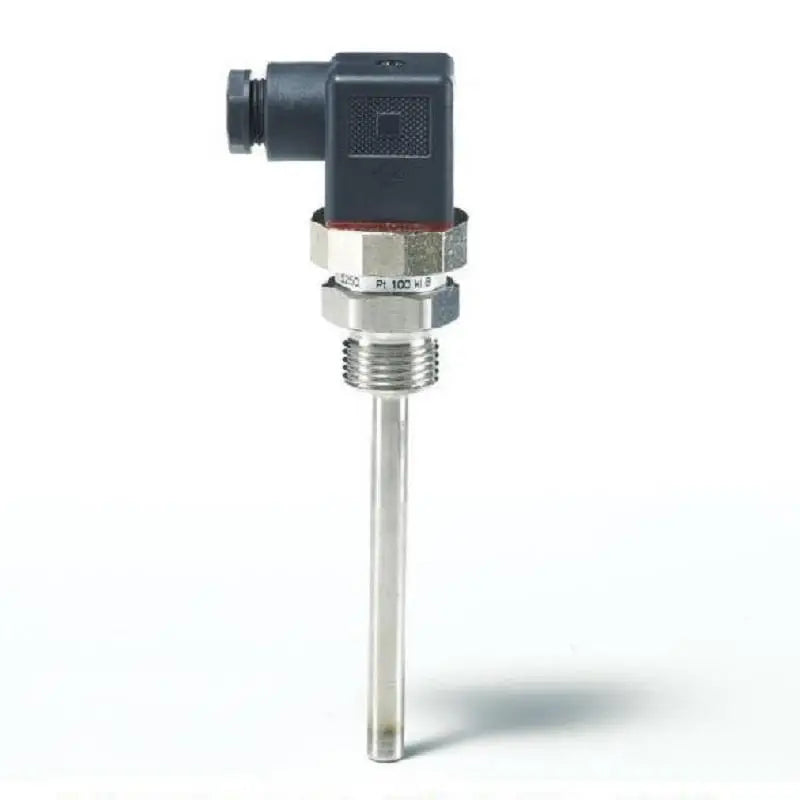
- Temperature gauges and switches: warn when the oil runs hot.
- Level gauges and switches: catch leaks and low oil before the pump starves.
- Clogging indicators: show when the filter elements need changing.
Many of these can feed straight into a PLC for alarms and trending. A slow rise in oil temperature also shows when an oil cooler or heat exchanger is starting to foul.
Replacing an Accumulator
- Read the code, volume, maximum pressure and certification stamp.
- Note the oil port thread, gas valve type and mounting.
- Check that the bladder or seal material suits your oil.
- Drain and isolate the old unit fully before removing it.
- Pre charge the new unit before filling it with oil.
Accumulators & Monitoring Specifications to Check
- Accumulator type, volume and maximum pressure
- Pre charge pressure for your duty
- Bladder, diaphragm or seal material
- Port size and gas valve type
- Safety block, relief setting and mounting
- Gauge and switch ranges and connections
Why Buy From TSA Hydraulics Engineering
As an accumulators & monitoring supplier, we match the volume, pressure rating and connections, then help you set the right pre charge. You get clear prices in AUD, OEM or equivalent options, and help sourcing accumulators & monitoring replacement parts such as bladders, seal kits, gas valves and charging kits. We tell you upfront whether a part is genuine or an equivalent.