

// Catalogue
14products


Filters
Sort Best selling




Similar products

// Buying guide
Hydraulic Valves by Job
Every hydraulic valve does one of a few jobs:
- Directional valves: start, stop and steer flow to cylinders and motors.
- Pressure valves: relieve, reduce, sequence and counterbalance.
- Flow valves: set the actuator speed.
- Check valves: allow flow one way only.
- Proportional and servo valves: give smooth, variable control from a signal.
- Each job has its own range. This page helps when you know the format you need but not where it lives.
Hydraulic Valves by Format
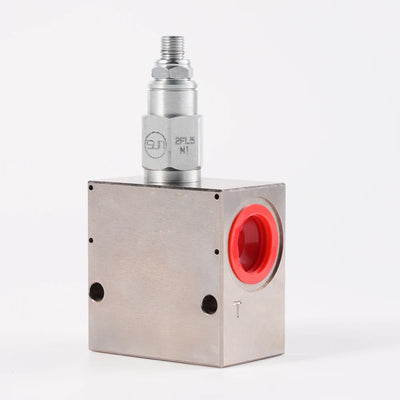
- Cartridge valves: screw into a cavity in a manifold block. They are compact and leak free, and common on mobile machines and power units.
- Slip in logic elements: large two way cartridges for high flow presses and injection moulding machines.
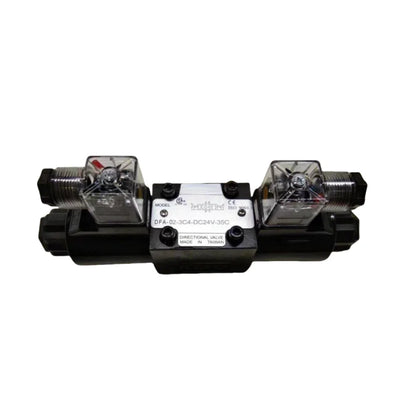
- Subplate valves: bolt onto a standard ISO 4401 pattern, such as CETOP 3 (NG6) or CETOP 5 (NG10).
- Modular valves: sandwich between a directional valve and its subplate, adding pressure, flow or check functions.
- Inline valves: threaded ports, fitted straight into pipes or hoses.
- Mobile sectional valves: stacked sections for tractors, cranes and loaders.
Cartridge Cavities Explained
A cartridge only fits a cavity of the matching size and form. Common sizes include 08, 10, 12 and 16, each with its own thread, depth and number of ports. Cartridges from two makers that share the same cavity standard will often interchange, but always check the cavity drawing first. A cartridge that is a few millimetres too long can block a port.
Legacy and Obsolete Valves
Older machines often carry valves from makers that have merged, been renamed or stopped production. In most cases, a current valve with the same mounting pattern and function will bolt straight on. Where the pattern is unusual, an adaptor plate or a small manifold can bridge the gap. Our system design and modelling service can help when a whole valve stack needs rethinking.
Keeping Hydraulic Valves Healthy
- Keep the oil clean, because most valve problems start with dirt.
- Use the right seals: nitrile for mineral oil, and FKM for higher temperatures and some fire resistant fluids.
- Tighten cartridges and mounting bolts to the maker’s torque.
- Keep the oil temperature in range, because hot oil thins and leaks more.
Hydraulic Valves Specifications to Check
- Function and spool symbol
- Format: cartridge, subplate, modular, inline or sectional
- Cavity size or mounting pattern
- Maximum pressure and flow
- Coil voltage and connector, if electrically operated
- Seal material and fluid type
Why Buy From TSA Hydraulics Engineering
As a hydraulic valves supplier, we work from the mounting and function, not just a part number, so obsolete codes are rarely a dead end. You get clear prices in AUD, OEM or equivalent options, and help sourcing hydraulic valves replacement parts such as cartridges, coils, seal kits and subplates. We tell you upfront whether a valve is genuine or an equivalent.