
// Catalogue
6products


Filters
Sort Best selling
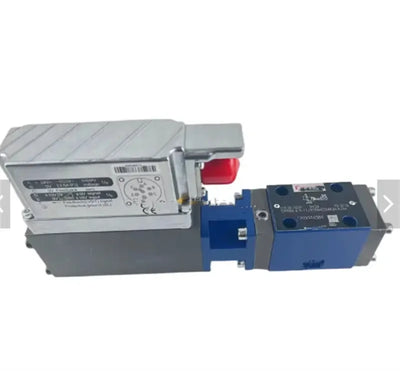


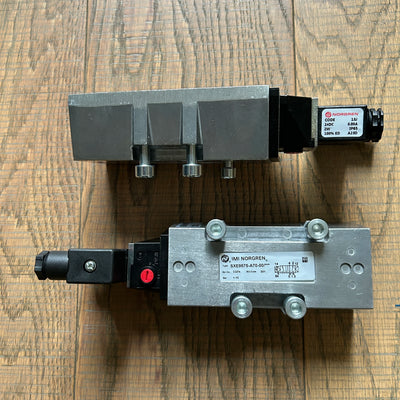
Similar products

// Buying guide
How a Proportional Valve Works
A proportional solenoid produces a force that rises with the current through it. That force moves the spool or poppet against a spring, so a bigger signal gives a bigger opening. Many valves add a position sensor on the spool, which corrects any error and improves accuracy and repeatability.
Types of Proportional Valve
- Proportional directional valves: control both the direction and the speed of a cylinder or motor.
- Proportional pressure relief valves: set the system pressure from a signal, for force control and soft pressure changes.
- Proportional pressure reducing valves: set a lower, variable pressure in one branch.
- Proportional flow control valves: set the speed independently of direction.
- Mobile proportional valves: sectional valves driven by joysticks or CAN bus on cranes, loaders and forestry machines.
Onboard or External Electronics?
- Onboard electronics: the amplifier is built into the valve. You feed it power and a command signal, such as plus or minus 10 V or 4 to 20 mA. Wiring is simpler, and setup is done at the factory.
- External amplifier cards: the valve receives a pulse width modulated current from a separate card. These are common on older machines and fully adjustable on site.
When replacing a card driven valve with an onboard electronics version, check the power supply, signal and connector before ordering.
Ramps, Deadband and Gains
Proportional valves are tuned with a few key settings:
- Ramp time: how quickly the valve opens and closes, which sets how smoothly the machine starts and stops.
- Deadband compensation: makes up for spool overlap, so small signals still produce movement.
- Minimum and maximum current: set the useful range of the valve.
Our commissioning team can help set these on a new or retrofitted machine.
Signs of Trouble
- The actuator responds late or unevenly to the signal.
- Motion is jerky at low speed.
- The valve hums, or the coil runs very hot.
- Settings drift over time.
Dirt is a common cause, so check the oil and filters. On card driven valves, check the card settings and the wiring too.
Proportional or Servo?
Proportional valves suit most industrial and mobile jobs that need smooth, variable control. For the fastest response and tightest accuracy in closed loop systems, such as test rigs and high performance presses, servo valves remain the top choice.
Proportional Valves Specifications to Check
- Function: directional, pressure or flow
- Size and mounting pattern, such as CETOP 3 or 5
- Command signal, and onboard or external electronics
- Spool type and rated flow
- Spool position feedback, if fitted
- Connector type and supply voltage
Why Buy From TSA Hydraulics Engineering
As a proportional valves supplier, we match the valve, electronics and signal together, so the machine moves the way it did before. You get clear prices in AUD, OEM or equivalent options, and help sourcing proportional valves replacement parts such as coils, amplifier cards and seal kits. We tell you upfront whether a valve is genuine or an equivalent.