
// Catalogue
Directional Control Valves
59products
Browse by Type


Filters
Sort Best selling




Similar products

// Buying guide
Ports and Positions in a Nutshell
Every directional valve is named by two numbers. The first is the number of ports: the connections for supply, return or exhaust, and the work lines. The second is the number of positions the spool can sit in, so a 5/3 valve has five ports and three positions. Pick the ports to suit the actuator, then the positions to suit how it should behave.
Valve Types by Ports and Positions
2/2 Way Valves
Two ports and two positions: the valve is simply open or closed. These valves isolate lines, dump pressure, fill tanks, and switch air or water on and off. Choose normally closed or normally open, depending on the fail-safe state you need.
3/2 Way Valves
Three ports let the valve pressurise a line and then vent it. They drive single acting cylinders, spring-return actuators and the pilot signals for larger valves.
4/2 Way Valves
Four ports and two positions drive a double-acting cylinder or a motor in both directions. The actuator is always moving one way or the other, with no middle stop.
5/2 Way Valves
This is the pneumatic workhorse. Five ports give each cylinder end its own exhaust, so you can fit a separate speed control on each stroke. Two positions mean the cylinder is always either extending or retracting.
5/3 Way Valves
The third, centre position lets the cylinder stop part way. A closed centre holds the cylinder in place, an exhaust centre lets it move freely, and a pressure centre pushes on both ends. In hydraulics, 4/3 valves do the same job, and the spool centre decides whether the pump unloads, the load holds or the motor floats.
How the Valve Is Switched
Solenoid Valves
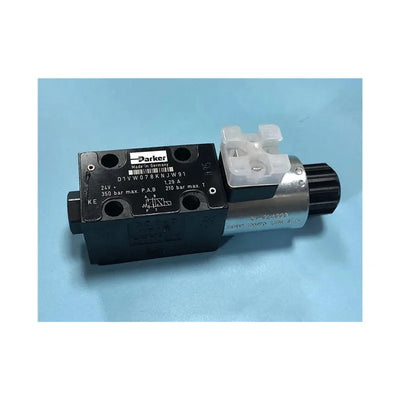
An electric coil moves the spool, so a PLC or switch can control the valve. Coils come in AC or DC, in many voltages and with different connectors, so match all three.
Pilot Operated Valves
A small pilot valve uses system pressure to shift a larger main spool. This lets a small coil control big flows, which makes it the standard choice for larger hydraulic valves and high flow air circuits.
Manually Operated Valves
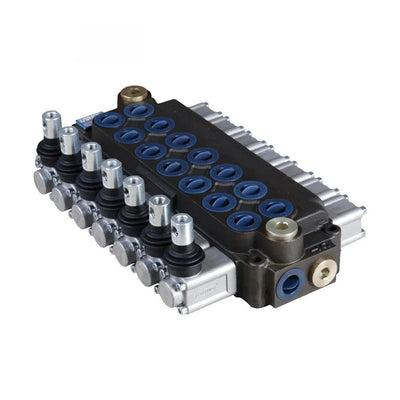
Levers, push buttons, foot pedals and rotary knobs shift the spool by hand. They suit mobile machines, test stands, jacks and any job where an operator needs direct control without electrics.
When a Valve Stops Shifting
Work through these checks before you buy a whole new valve:
- Check the coil. Measure its resistance and the voltage at the plug. A burnt coil often looks discoloured or smells hot.
- Push the manual override. If the spool moves by hand, the problem is electrical.
- Look for contamination. Dirt or varnish can jam a spool, especially in hydraulic valves.
- Confirm the coil type. An AC coil on a DC supply, or the wrong voltage, will overheat quickly.
- Check the pilot pressure on pilot-operated valves. With too little pressure, the main spool will not shift.
Clean oil is the best protection, so keep your filters in good order.
Pairing With Other Valves
A directional valve chooses where the flow goes. To control how fast it moves or how hard it pushes, pair it with valves from our Pressure & Flow family, such as flow controls and relief valves.
Directional Control Valves Specifications to Check
- Number of ports and positions, and the spool or centre type
- Actuation: solenoid, pilot, manual or a mix
- Coil voltage, AC or DC, and the connector
- Size and mounting: a subplate pattern such as CETOP 3 or 5, a cartridge, or inline ports
- Maximum pressure and flow
- Medium: hydraulic oil or compressed air
Why Buy From TSA Hydraulics Engineering
As a directional control valves supplier, we match the spool, coil and mounting so the new valve drops straight in. You get clear prices in AUD, OEM or equivalent options, and help sourcing directional control valves replacement parts such as coils, connectors and seal kits. We tell you upfront whether a valve is genuine or an equivalent.